Laser tag is an exciting, action-packed game that can be played by individuals, families, friends, and teams. Whether you’re organizing a birthday party, corporate event, or just having a fun day out, one of the key factors in setting up a laser tag game is determining how much space is needed. But here’s the good news: laser tag arenas don’t require a specific size — they can be adapted to fit a variety of spaces, from compact indoor areas to expansive outdoor environments.
In this blog, we’ll explore how much space is typically needed for a laser tag arena, how that space can be adapted and customized to suit different needs, and what factors you should consider when planning your arena layout.
1. Understanding the Space Requirements for Laser Tag
While the size of your arena will depend on a number of factors (such as the number of players, game modes, and equipment), there are general guidelines to follow when setting up a space for laser tag.
1.1 Indoor Laser Tag Arena Size
For indoor laser tag, minimum space requirements usually range from around 2,000 to 3,000 square feet. Here’s why:
- Player Density: You want enough room for players to move around, strategize, and avoid feeling too cramped. If the space is too small, the game can feel chaotic and difficult to navigate. A good rule of thumb is that a space of 2,000 square feet can comfortably accommodate 12-20 players at once, depending on the game mode.
- Movement and Engagement: A larger space allows players to engage in more tactical play — using obstacles for cover, sneaking around corners, and coordinating with teammates. If the space is too small, players might just be running around in circles and won’t have the opportunity to develop strategies or plan ambushes.
- Obstacles and Features: Within the designated space, you’ll need room for obstacles (such as inflatable barriers, walls, or other man-made objects) that help create cover and excitement. These obstacles should be arranged to foster movement and strategy but shouldn’t overcrowd the area.
- Safety: It’s important to allow space for players to navigate the arena without colliding with obstacles or other players. If you’re hosting the game indoors, ensure that the space is free from any hazardous areas, sharp corners, or obstructed sightlines.
1.2 Outdoor Laser Tag Arena Size
When it comes to outdoor laser tag, the available space can be much larger and more flexible. An outdoor arena could be anything from an open field to a wooded forest. Here’s what to consider:
- Field Size: For larger groups, a space of 10,000 square feet (about a quarter of an acre) or more will allow for more elaborate setups, where players can move freely and engage in longer-range, strategic play.
- Terrain: If you’re playing in a natural environment like a forest or field, you can leverage the terrain itself as part of your arena, using natural cover such as trees, hills, and rocks to create tactical advantages. This allows you to use the space creatively without needing additional man-made obstacles.
- Visibility and Cover: A larger outdoor arena allows for more varied line-of-sight challenges and opportunities for players to hide or take cover. For example, players could be required to move through tall grass, navigate hills, or move between large trees. The larger the space, the more dynamic the gameplay can become.
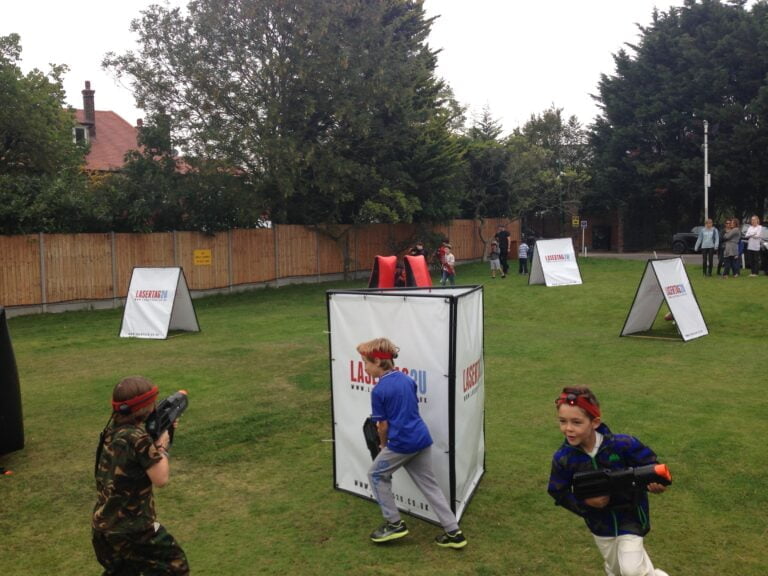
- Flexible Play Areas: If you don’t have a huge outdoor space, laser tag can still work in smaller areas, like a backyard or community park. By incorporating inflatable obstacles or temporary barriers, you can create a customizable, safe arena that can be adapted to suit the number of players.
2. Adapting Space to Suit Different Game Styles
One of the best things about laser tag is that it can be adapted to different types of spaces and game styles. Whether you’re setting up for a birthday party, team-building exercise, or a more competitive event, the layout of the arena can be customized to create unique challenges. Let’s take a look at some common ways to adapt space for different settings:
2.1 Small Spaces (Under 2,000 sq. ft.)
If you have a smaller indoor space (like a house, gymnasium, or community hall), don’t worry — you can still create an exciting laser tag experience!
- Compact Obstacles: Use smaller, portable obstacles like inflatable barriers, cones, or soft barriers to create defined paths and strategic areas. Think of it like a maze — tight spaces force players to be more creative with their strategies and team coordination.
- Shorter Game Durations: With smaller arenas, you’ll likely have more quick engagements. Opt for shorter rounds of play, and perhaps use capture-the-flag or team-based elimination modes, where players need to think fast and plan quickly.
- Varying Game Modes: You can adapt small spaces to suit different styles of play. A smaller area is great for fast-paced, action-packed modes like team deathmatch, where you need quick reflexes and close-quarters combat.
2.2 Medium Spaces (2,000 – 5,000 sq. ft.)
Medium-sized spaces offer more flexibility while still being manageable in terms of setup and safety. These spaces are great for corporate team-building events or larger private parties.
- Zone-Based Play: You can divide the arena into different zones, such as offensive and defensive areas, or create obstacles that force players to switch between zones. This would mimic a more complex arena while still being compact enough for smaller teams to navigate.
- More Complex Obstacles: With more space, you can use a combination of inflatable barriers, static walls, and tunnels to create areas for stealth, quick assaults, and defensive holds. This variety keeps players engaged and encourages them to use different tactics.
- Team Tactics: Medium spaces are perfect for team-based games where communication and strategy become important. You can set up strategic locations, like high ground positions or defensible objectives, where players need to coordinate to take control or protect certain areas.
2.3 Large Spaces (Over 5,000 sq. ft.)
Large spaces — whether it’s a warehouse, outdoor field, or even a large forest — provide the most flexibility in terms of gameplay and arena design. These spaces can accommodate larger teams, multiple game modes, and more advanced obstacles.
- Multiple Zones and Objectives: With the extra room, you can create multiple play zones, each with different objectives. For example, one zone might focus on capturing points, while another zone requires players to complete time-sensitive objectives.
- Natural Terrain: In outdoor environments, leverage natural terrain features like hills, trees, and streams as part of the gameplay. These create natural challenges that make the game feel more like a battle, forcing players to plan and react to their environment.
- Longer Engagements: Larger arenas allow for more strategic and longer play sessions. You can incorporate resource management or special items that players need to find or control, such as flags, power-ups, or special objectives spread across the arena.
2.4 Adaptable Spaces (Pop-Up & Temporary Setups)
For temporary or pop-up laser tag events, such as festivals, fairs, or one-time parties, you can set up adaptable arenas in any available space, including parking lots, outdoor fields, or even indoor venues.
- Inflatable Obstacles: Use inflatable walls, tunnels, and barricades to quickly and easily build a custom arena. These can be adjusted depending on the available space and the number of players, offering a flexible and easily transportable setup.
- Modular Arena Design: Modular components allow you to create an arena that can be expanded or contracted depending on the available area. These components can be easily re-arranged for different themes, challenges, and game modes.
3. Considerations When Setting Up a Laser Tag Arena
3.1 Player Count
The number of players you want to accommodate will greatly affect how much space is needed. More players typically require more space for movement, cover, and strategy. Ensure that your layout allows players to engage with each other without overcrowding.
3.2 Safety and Flow
In any laser tag setup, safety is paramount. Ensure that the space allows for easy movement without obstacles that could lead to injury. Also, ensure players have clear sightlines and enough room to maneuver around obstacles. Consider emergency exits, supervision areas, and adequate lighting if you’re playing indoors.
3.3 Flexible Layouts
A great laser tag arena can be adapted for different types of play. From tactical games requiring stealth to high-paced, close-combat matches, the arena should be able to shift to accommodate different gameplay styles, team sizes, and special events.
Conclusion: The Power of Adaptable Laser Tag Arenas
While the amount of space needed for a laser tag arena can vary, the most important thing is creating a space that encourages fun, strategy, and competition. Whether you’re working with a small indoor area, an expansive outdoor field, or a temporary pop-up setup, laser tag is incredibly versatile and can be adapted to suit nearly any space.
By considering the space size, layout, obstacles, and game modes